Designing Intuition: How Metacognition Enhances Game Design

This design review was extracted from a larger essay that includes an analysis of the foundational and theoretical framework of metacognition.

what is metacognition

Metacognition, is our ability to think about thinking. This cognitive capability enables us to assess, plan, monitor, and evaluate our learning and progress. It is a process that runs in parallel with the current task. This essay delves into one of its key sub-categories: metacognitive knowledge.

how it helps gamers

Metacognitive regulation is how people keep track of and manage their thinking while learning.It consists of planning what to do, tracking how they’re doing it, and evaluating each outcome. All of this processing takes up mental effort (cognitive load) which helps filter out distractions so they can stay focused.

By analyzing the virtual reality game Saints and Sinners®, this essay aims to demonstrate how an understanding of metacognition can provide invaluable insights for designers.

how it helps game designers

anticipating player needs and behaviors

Designers can create systems that guide players toward success without overwhelming them. For example, by recognizing that new players may not have the procedural knowledge of experienced gamers, designers can introduce scaffolding techniques—such as gradual difficulty increases, hints, or optional tutorials—to help players build their skills and confidence over time.

balancing cognitive load

Reducing cognitive load makes it easier for players to absorb new information and develop skills, which is essential in learning environments or tutorial phases. However, intentionally increasing cognitive load—such as presenting time-sensitive challenges, multiple competing tasks, or overwhelming visual and auditory stimuli—can heighten stress levels and create a more intense, immersive experience.

supporting self-regulation

By providing clear feedback, progress indicators, and opportunities for reflection, designers can encourage players to monitor their own progress, set goals, and adjust their strategies. Games that offer built-in moments to assess what went well (and what didn’t) help players develop skills that transfer to other gaming challenges and even real-world problem-solving.

adapting to different learning preferences

While it’s impossible to accommodate every individual preference, understanding that players approach games with varied learning styles and cognitive strategies enables designers to offer multiple paths to success. Some players might learn best through exploration and experimentation, while others may benefit from structured guidance. Designing with these differences in mind helps create a more inclusive experience that keeps a broader audience engaged.

design review

Saints and Sinners is a virtual reality game modeled after the television series, The Walking Dead®. The premise is simple; survive by any means necessary—avoid zombies, dodge marauding gangs of survivors, find food, and collect weapons. This review will explore the explicit and implicit learning techniques implemented to help players learn, increase efficiency, and reduce cognitive load.

The user (known as “learner”) is a former gamer who once spent many hours per day playing various types of first-person-shooter video games. A self-described “retired” gamer, he understands general game-play, but with the constraints introduced by the VR modality (a new modality for him), he is considered a novice.

1. instruction and environment

The game starts by taking the learner through a training course where he learns to interact with the world around him. In figures 1.1-1.2, he "speaks" with survivors (experts), who guide him through various lessons against zombies that have been restrained and rendered harmless. Experimenting and exploring varying tactics in a safe, risk-free environment is a foundational element of metacognitive growth.

Additionally, O'Neil et al. (2016) showed that scenario-specific guidance engenders better performances and makes knowledge more easily transferable to other tasks.
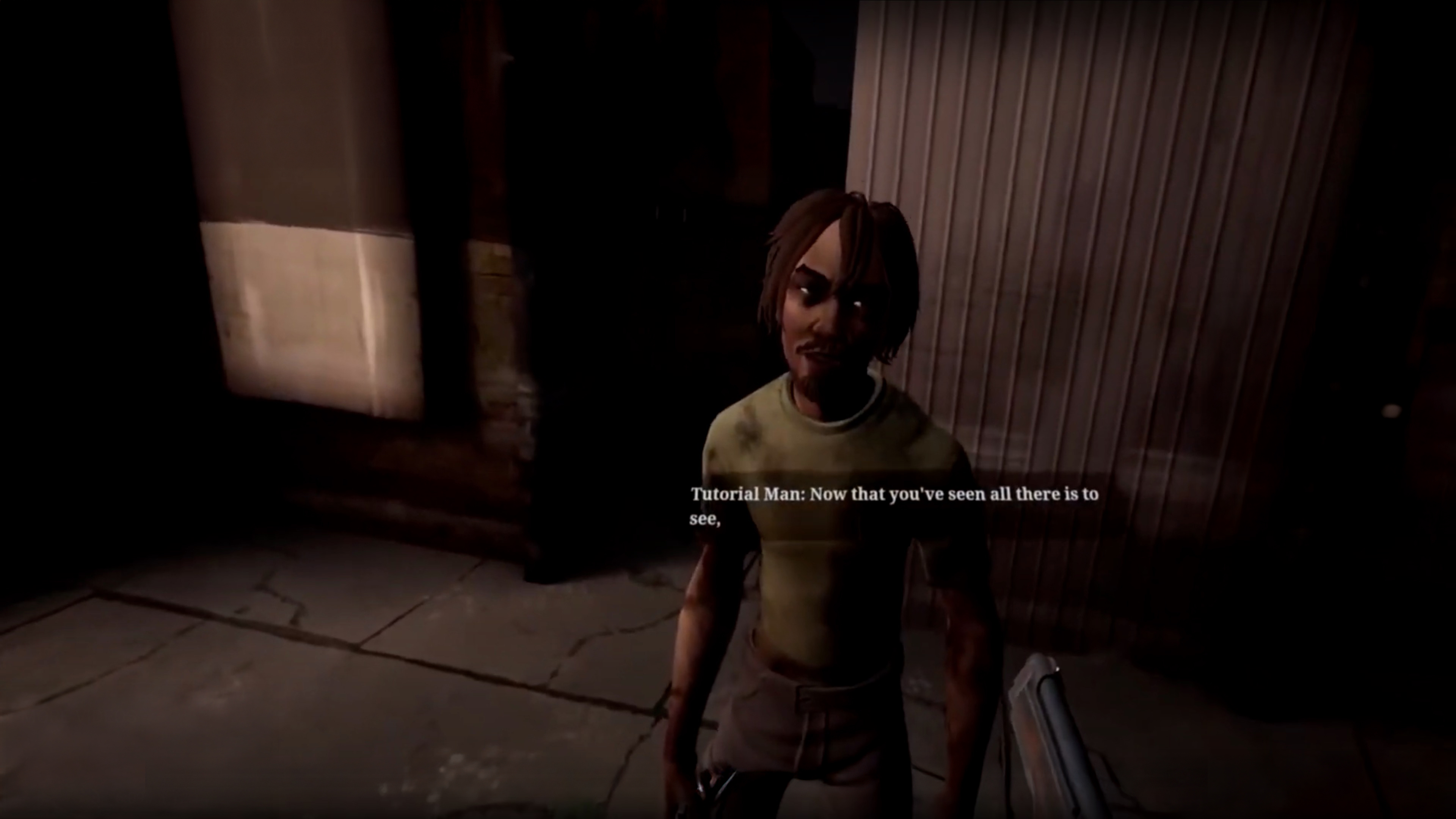
figure 1: Your expert guide (Tutorial Man) steps you through each exercise to assure your character can survive in the apocalypse.

2A. limiting cognitive load

At the beginning of each "round", the game character receives assignments from collaborators via short-wave radio transmissions or through randomly dropped letters.

As depicted in Figure 2A, these assignments are automatically cataloged, tracked, and updated in the character's notebook. This feature allows the learner to save valuable cognitive load for more pressing tasks, like navigating through the streets and buildings of each level.
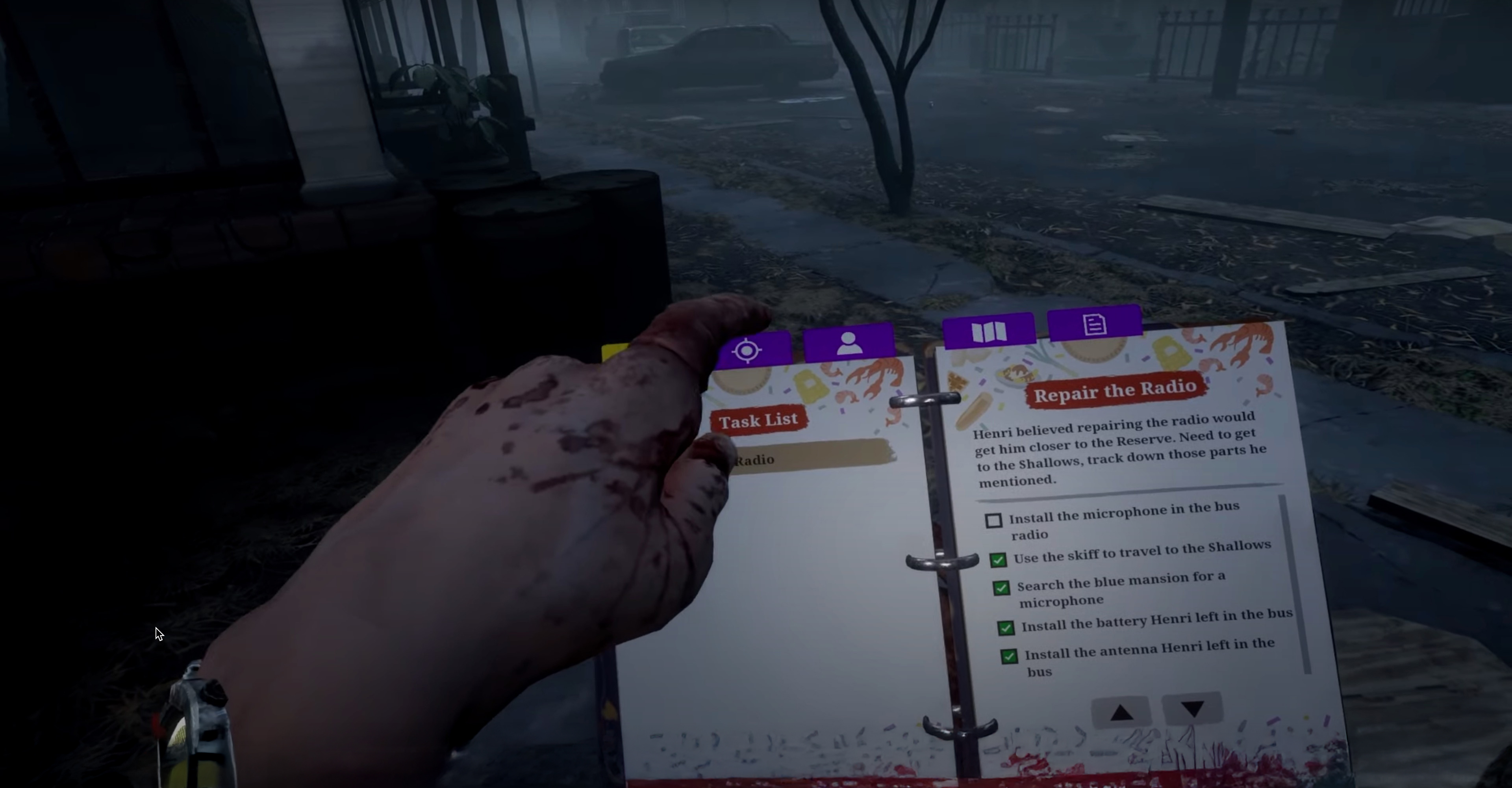
figure 2A: Task lists start small but as the level progresses, right, items are added and checked off. Not having to remember each task reduces cognitive load for the gamer and allows him to focus on surviving. Video still by Vizm.

2B. increasing cognitive load

In this sequence, believing the mission is complete, the character steps out only to face an ambush by a militia squad. A chaotic gunfight ensues, causing the learner’s anxiety—and cognitive load—to spike. Even after seemingly dispatching the militia, the tension doesn’t ease. Ominous background music warns that the threat isn’t over. The learner scans their surroundings, bracing for the unexpected. When he can hear a zombie closing in from behind, the situation becomes even more chaotic. Struggling with weapon management, the learner misses shots they would normally hit and becomes disoriented, even ejecting a magazine by mistake instead of firing. The steadily increasing cognitive load amplifies the sense of stress and urgency, creating a deeply immersive and realistic experience.
figure 2B: The effects of increased cognitive load can be leveraged to create more immersive experiences. Video by author.

3. task completion

Progress is also measured in less overt ways. After each level or mission is completed, the character returns to the safety of his base where items can be tallied, stored, and/or recycled into gear for future missions.

Seeing what has been collected, what is available, and what remains to be collected as shown in figures 3.1-3.3, allows the gamer to assess his progress and create strategies and goals moving forward.
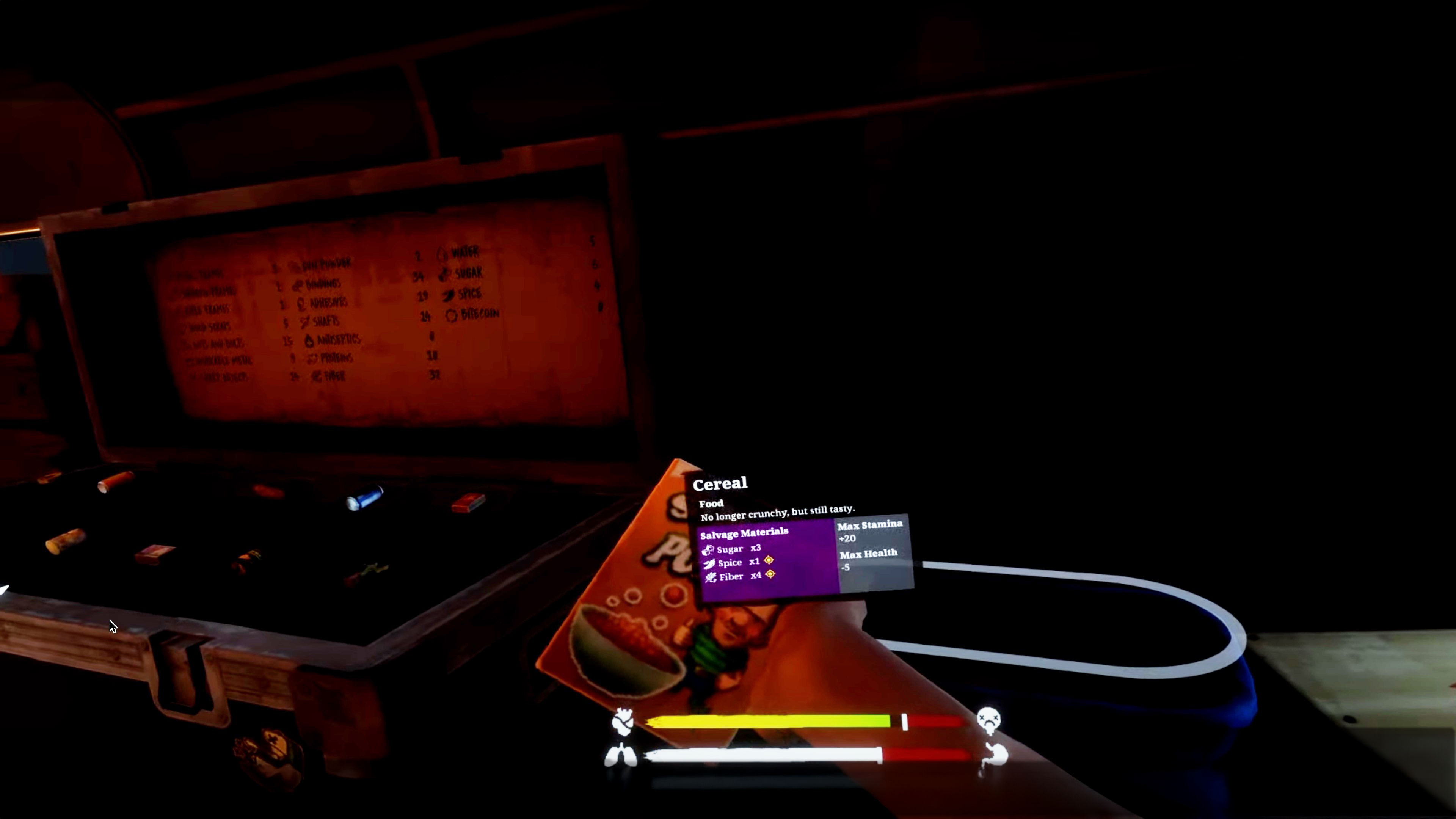
figure 3.1: The recycled value of scavenged or worn-out gear is displayed in terms of “ingredients” which are used to build other items, like, food, first aid, and weapons. Video still by Vizm.
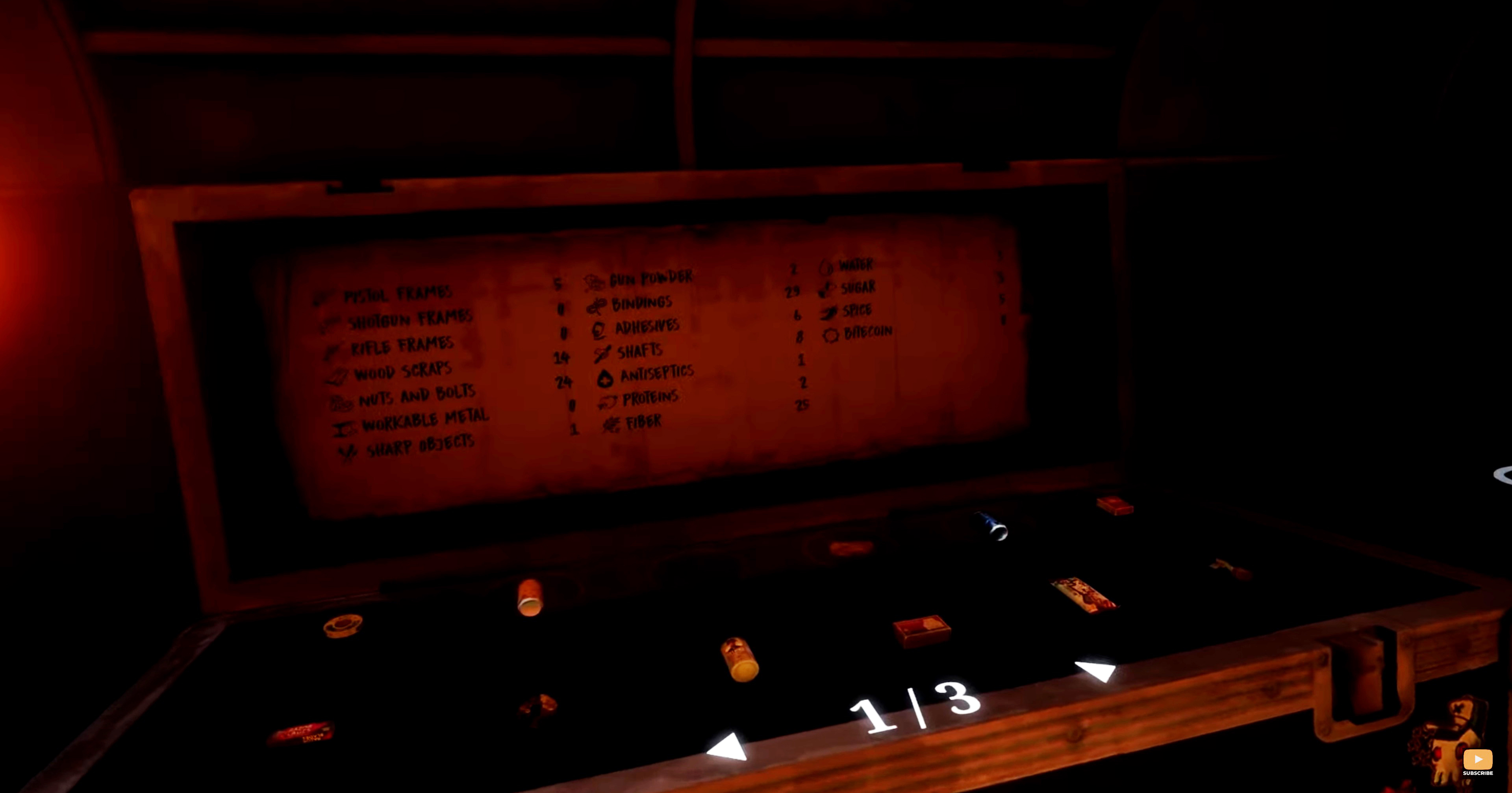
figure 3.2: A running tally of all collected ingredients. Video still by Vizm
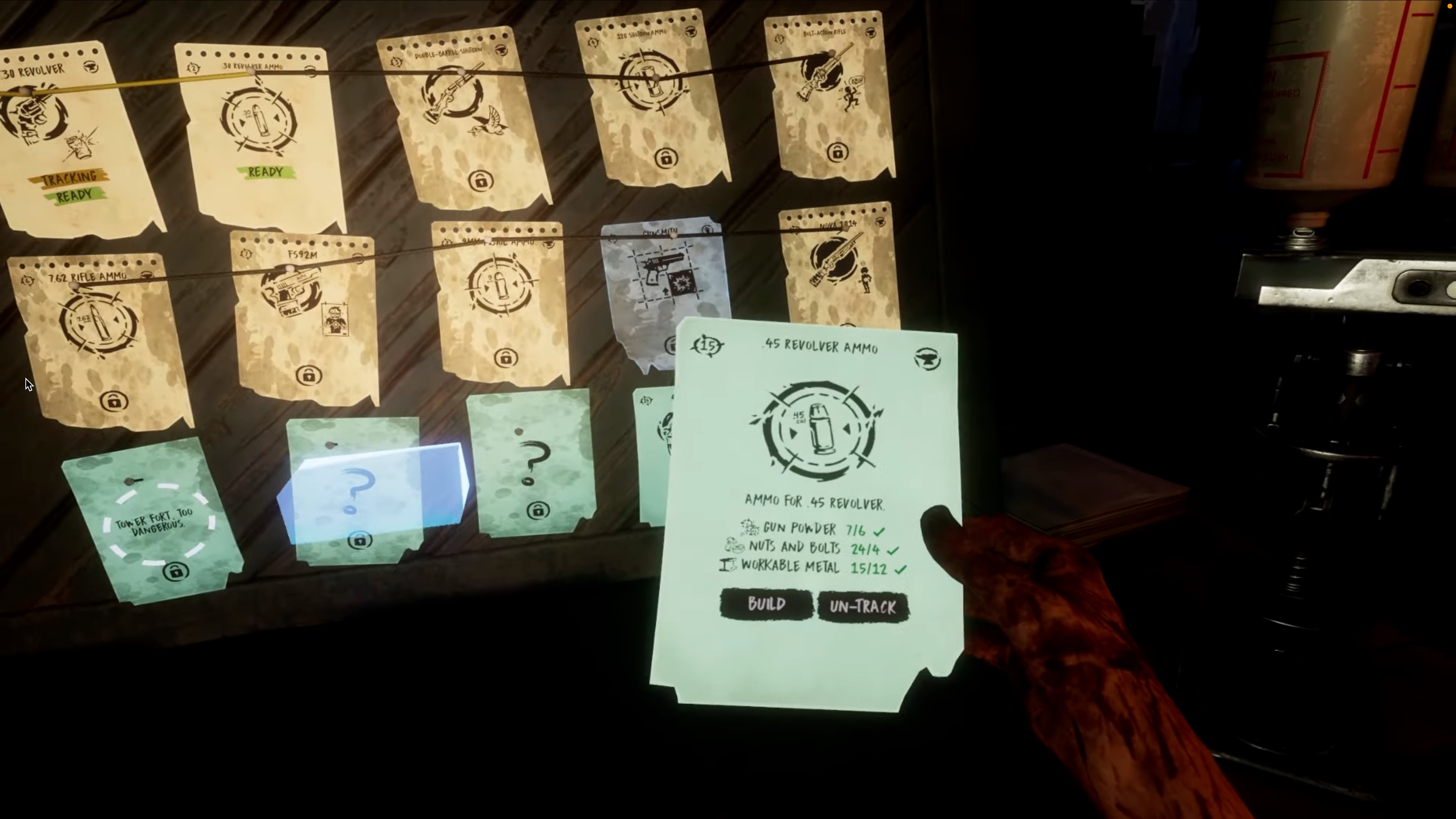
figure 3.3: Each card displays how many ingredients are collected vs required. Once enough are collected, the item is buildable. Video still by Vizm

4. scaffolding

Scaffolding is pivotal in fostering self-sufficiency among learners. To help guide learners towards their goals, designers will integrate “supports” into an experience.

Task completion in Saints and Sinners often requires the learner to seek alternate entry into buildings through less than obvious affordances — especially for novices. To scaffold the experience, designers deliberately marked these inconspicuous affordances with white paint so the implied interaction becomes more obvious.

As figures 4.1-4.4 demonstrate, even without being specifically instructed, the learner knows these elements are meant to be interacted with (climbed). Having learned these markings signaled an interaction, the learner is now self-sufficient.
figure 4.1: The white markings running up the red building forms a ladder like pattern. For the leaner, this pattern and its diversity against surrounding objects signaled a climbable object. Video still by RabidRetrospectGames
figure 4.2: Most bookcases in the game can not be interacted with, so designers applied white markings along each shelf of this bookcase to tell the learner it can be grasped and climbed like a ladder through the hole in the porch ceiling. Video stills by RabidRetrospectGames
figure 4.3: the markings on the drain pipe on the blue house are less obvious but having seen the earlier example, the learner needs less direction to know that this drain pipe is climbable. Video still by RabidRetrospectGames
figure 4.4: here, the learner has reached one of the final levels of the game. after failing to find a way into a key building, the learner knew the actual way in must be accessible only through a “scaffold” entrance. Here, it’s found by scaling and traversing multiple surfaces. Video captured from RabidRetrospectGames

conclusion

In our increasingly complex and information-rich world, where experiences span a multitude of modalities, the necessity of understanding and catering to the user's cognitive and learning styles becomes paramount. This paper has demonstrated that by embracing a deeper awareness of these styles and the practices that encourage metacognitive activities, designers can create more engaging, effective, and intuitive user experiences.

Through the analysis of Saints and Sinners, we've seen how metacognitive principles can be skillfully integrated into design to enhance learning and user engagement. The game's approach to instruction, environment, goal setting, task completion, and time management not only serves the purpose of gameplay but also aligns with the cognitive processes of the players. It showcases the practical application of metacognitive strategies, such as scenario-specific guidance, pattern recognition, and strategy formulation, in enhancing the learning curve and overall experience for users.

references

  1. Ambrose, S. A., Bridges, M. W., DiPietro, M., Lovett, M. C., & Norman, M. K. (2010). How learning works: Seven research-based principles for smart teaching. John Wiley & Sons.
  2. Ausburn, L. J., & Ausburn, F. B. (1978). Cognitive styles: Some information and implications for instructional design. Ectj, 26(4), 337-354.
  3. Azevedo, R., & Aleven, V. (Eds.). (2013). International handbook of metacognition and learning technologies (Vol. 26). New York: Springer.
  4. Bakar, Z., & Ali, R. (2018). Interchangeable Concept of Cognitive Styles and Learning Styles: A Conceptual Analysis. Journal of Education and Learning (EduLearn), 12. https://doi.org/10.11591/edulearn.v12i2.6573
  5. Brown, A. (1987). Metacognition, executive control, self-regulation, and other more mysterious mechanisms. Metacognition, motivation, and understanding.
  6. Centre for Education Statistics and Evaluation. (2017). Cognitive load theory: Research that teachers really need to understand.
    Chi, M. T., Feltovich, P. J., & Glaser, R. (1981). Categorization and representation of physics problems by experts and novices. Cognitive science, 5(2), 121-152.
  7. Chiquito, A. B. (1994). Metacognitive learning techniques in the user interface: Advance organizers and captioning. Computers and the Humanities, 28(4), 211-223.
  8. DanQ8000. (2020, February 11). The Walking Dead: Saints & Sinners - Let’s Play - Part 1 - “Day 0: Tutorial and Intro” [Video]. YouTube. https://www.youtube.com/watch?v=TZsNyuZ-wwQ
  9. Efklides, A. (2006). Metacognitive experiences: The missing link in the self-regulated learning process. Educational Psychology Review, 18(3), 287-291.
  10. Felder, R. M. (2010). Are learning styles invalid?(Hint: No!). On-course newsletter, 27.
  11. Flavell, J. H. (1979). Metacognition and cognitive monitoring: A new area of cognitive–developmental inquiry. American psychologist, 34 (10), 906.
  12. Frith, C. D. (2012). The role of metacognition in human social interactions. Philosophical Transactions of the Royal Society B: Biological Sciences, 367(1599), 2213-2223.
  13. GNQ Gaming. (2022, January 8). Saints and Sinners VR Part 8 Getting Into The Gym At Rampart Worst Mission ever [Video]. YouTube. https://www.youtube.com/watch?v=acGOtdZVfgw
  14. Hsu, N. S., & Jaeggi, S. M. (2014). The emergence of cognitive control abilities in childhood. Current topics in behavioral neurosciences, 16, 149–166. https://doi.org/10.1007/7854_2013_241
  15. Inhelder, B., & Piaget, J. (1958). The growth of logical thinking from childhood to adolescence: An essay on the construction of formal operational structures (Vol. 22). Psychology Press.
  16. Jansiewicz, E. M. (2008). The relationship between executive functions and metacognitive strategy learning and application.
  17. Jonassen, D. H., & Grabowski, B. L. (2012). Handbook of individual differences, learning, and instruction. Routledge.
  18. Jones, M. G., Farquhar, J. D., & Surry, D. W. (1995). Using metacognitive theories to design user interfaces for computer-based learning. Educational Technology, 35(4), 12-22.
  19. Kavousi, S., Miller, P. A., & Alexander, P. A. (2020). Modeling metacognition in design thinking and design making. International Journal of Technology and Design Education, 30(4), 709-735.
  20. Kleitman, S., & Gibson, J. (2011). Metacognitive beliefs, self-confidence and primary learning environment of sixth grade students. Learning and Individual Differences, 21(6), 728-735
  21. Kirsh, D. (2005). Metacognition, distributed cognition and visual design. Cognition, education, and communication technology, 147-180.
  22. Koff, R. H. (1967). The Definition of a Cognitive Control Principle: A Case of Diminishing Returns.
  23. Kolb, D. A. (2014). Experiential learning: Experience as the source of learning and development. FT press.
  24. Komori, M. (2016). Effects of working memory capacity on metacognitive monitoring: A study of group differences using a listening span test. Frontiers in Psychology, 7, 285.Livingston, J. A. (2003). Metacognition: An Overview.
  25. Lee, M., & Baylor, A. L. (2006). Designing metacognitive maps for web-based learning. Journal of Educational Technology and Society, 9, 344–348.
  26. Lo, J. J., Chan, Y. C., & Yeh, S. W. (2012). Designing an adaptive web-based learning system based on students’ cognitive styles identified online. Computers & Education, 58(1), 209-222.
  27. López-Mesa, B., & Thompson, G. (2006). On the significance of cognitive style and the selection of appropriate design methods. Journal of Engineering Design, 17(4), 371-386.
  28. López-Vargas, O., Ibáñez-Ibáñez, J., & Racines-Prada, O. (2017). Students’ metacognition and cognitive style and their effect on cognitive load and learning achievement. Journal of educational technology & society, 20(3), 145-157.
  29. Marsden, N., Pröbster, M., Haque, M. E., & Hermann, J. (2017, November). Cognitive styles and personas: designing for users who are different from me. In Proceedings of the 29th Australian Conference on Computer-Human Interaction (pp. 452-456).
  30. Metcalfe, J. (2008). Evolution of metacognition. Handbook of metamemory and memory, 29, 46.
  31. Miller, E. K., & Cohen, J. D. (2001). An integrative theory of prefrontal cortex function. Annual review of neuroscience, 24(1), 167-202.
  32. Moortgat, M. (2002). Encyclopedia of cognitive science.
  33. Nelson, T. O. (1990). Metamemory: A theoretical framework and new findings. Psychology of Learning and Motivation, 125–173. https://doi.org/10.1016/s0079-7421(08)60053-5
  34. Nickerson, R. S. (1999). How we know—and sometimes misjudge—what others know: Imputing one’s own knowledge to others. Psychological Bulletin, 125(6), 737–759. https://doi.org/10.1037/0033-2909.125.6.737
  35. O'Neil, H. F., Baker, E. L., & Perez, R. S. (Eds.). (2016). Using games and simulations for teaching and assessment: Key issues. Routledge.
  36. Palmer, E. C., David, A. S., & Fleming, S. M. (2014). Effects of age on metacognitive efficiency. Consciousness and Cognition, 28, 151–160. https://doi.org/10.1016/j.concog.2014.06.007
  37. Papaleontiou-Louca, E. (2019). Do children know what they know? Metacognitive awareness in preschool children. New ideas in psychology, 54, 56-62.
  38. Pintrich, P. R. (2002). The role of metacognitive knowledge in learning, teaching, and assessing. Theory into practice, 41(4), 219-225.
  39. RabidRetrospectGames. (2020, January 26). Walking Dead SAINTS & SINNERS Gameplay Walkthrough Part 1 FULL GAME No commentary [Video]. YouTube. https://www.youtube.com/watch?v=rnSp0n94i4s
  40. Rahman, S., Abdullah, M. S., Yasin, R. M., Meerah, T. S. M., Halim, L., & Amir, R. (2011). Student learning style and preferences for the promotion of metacognitive development activities in science class. _World Applied Sciences Journal_, _14_, 11-16.
  41. Ramadhan, A. A., & Pratana, C. (2020). Students’ metacognition skill: How the implementation in chemistry learning?. In Journal of Physics: Conference Series (Vol. 1440, No. 1, p. 012013). IOP Publishing.
  42. Riding, R., & Cheema, I. (1991). Cognitive styles—an overview and integration. Educational psychology, 11(3-4), 193-215.
  43. Rogers, B. A., & Franklin, A. E. (2021). Cognitive load experienced by nurses in simulation-based learning experiences: An integrative review. Nurse Education Today, 99, 104815. https://doi.org/10.1016/j.nedt.2021.104815
  44. Robinson, D. H., Yan, V. X., & Kim, J. A. (2022). Learning Styles, Classroom Instruction, and Student Achievement.
  45. Scott, D. (2006). Plato's Meno. Cambridge University Press.
  46. Shannon, S. V. (2008). Using metacognitive strategies and learning styles to create self-directed learners. Institute for Learning Styles Journal, 1(1), 14-28.
  47. Stash, N. (2007). Incorporating cognitive/learning styles in a general-purpose adaptive hypermedia system. ACM SIGWEB Newsletter, 2007(Winter), 3-es.
  48. Sternberg, R. J. (1984). What should intelligence tests test? Implications of a triarchic theory of intelligence for intelligence testing. Educational researcher, 13(1), 5-15.
  49. substatica. (2021, January 9). The Walking Dead: Saints & Sinners - Tips, Tricks & Questions [Video]. YouTube. https://www.youtube.com/watch?v=Rpb-3ziS7ss
  50. Tarricone, P. (2011). The taxonomy of metacognition. Psychology Press.
  51. Veenman, M. V., & Spaans, M. A. (2005). Relation between intellectual and metacognitive skills: Age and task differences. Learning and individual differences, 15(2), 159-176.Weil, L. G., Fleming, S. M., Dumontheil, I., Kilford, E. J.,
  52. Vizm. (2021, June 8). The Walking Dead: Saints & Sinners VR FULL WALKTHROUGH [NO COMMENTARY] 1080P 60FPS [Video]. YouTube. https://www.youtube.com/watch?v=r8hbTzWcE_w
  53. Weil, R. S., Rees, G., Dolan, R. J., & Blakemore, S.-J. (2013). The development of metacognitive ability in adolescence. Consciousness and Cognition, 22(1), 264–271. https://doi.org/10.1016/j.concog.2013.01.004
  54. Winne, P. H. (2010). Improving measurement of self-regulated learning. Educational Psychologist, 45(4), 267-276.
  55. Yildirm, I., & Zengel, R. (2014). The Impact of Cognitive Styles on Design Students' Spatial Knowledge from Virtual Environments. Turkish Online Journal of Educational Technology-TOJET, 13(3), 210-215.
  56. Zhou, M. (2011). Learning Styles and Teaching Styles in College English Teaching. International Education Studies, 4(1), 73-77.